Krk Olive Oil: Discover the Liquid Gold of Krk Island
Table of Contents
The island of Krk is celebrated for its beautiful beaches, historic towns and distinctive Mediterranean cuisine. Yet one of its most authentic treasures comes from the land rather than the sea. Krk olive oil captures the character of an island where olive trees have been cultivated for generations, often on rocky slopes shaped by sunshine, wind and patient human hands.
For local families, olive growing connects generations through pruning, caring for trees and harvesting fruit. For visitors, Krk olive oil offers another way to understand the island: through its landscapes, traditional dishes and the people who preserve its culinary heritage.
During a summer holiday or quieter autumn escape, discovering olive oil from Krk can turn an ordinary meal into an experience that stays with you long after your trip.
Krk Olive Oil and the Island’s Unique Mediterranean Landscape
The distinctive qualities of Krk olive oil begin with its environment. Krk lies in the northern Adriatic, where Mediterranean conditions meet influences from the nearby mainland. Sunny summers encourage the development of olives, while cooler periods and the strong northeasterly bura wind create challenges that growers have learned to manage.
Much of the island is characterised by limestone, shallow soils and patches of reddish Mediterranean earth. These conditions have shaped the location and appearance of traditional olive groves. Farmers historically cleared stones from their fields and used them to build dry-stone walls, known locally as gromače, which remain a familiar feature of Krk’s countryside.
The production of olive oil on Krk is therefore closely connected to the island’s landscape. Trees grow in small agricultural plots, beside traditional paths and within centuries-old boundaries. Their resilience reflects generations of cultivation.
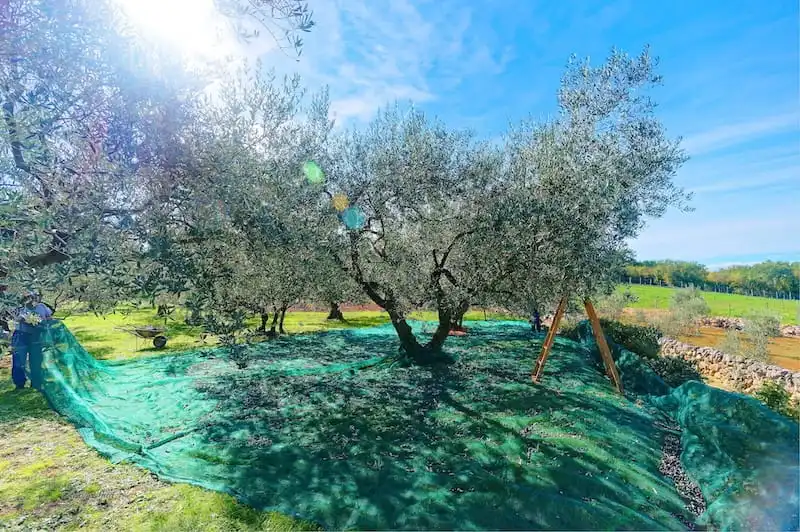
These groves reveal a quieter side of the island. It also explains why Krk olive oil is not simply another Mediterranean product but part of a living cultural landscape.
A Centuries-Old Olive-Growing Tradition
Olive cultivation has long played an important role in the everyday life of Krk’s inhabitants. In the past, olive oil was valued for cooking, household needs and trade. Production required maintaining trees, collecting fruit and milling olives.
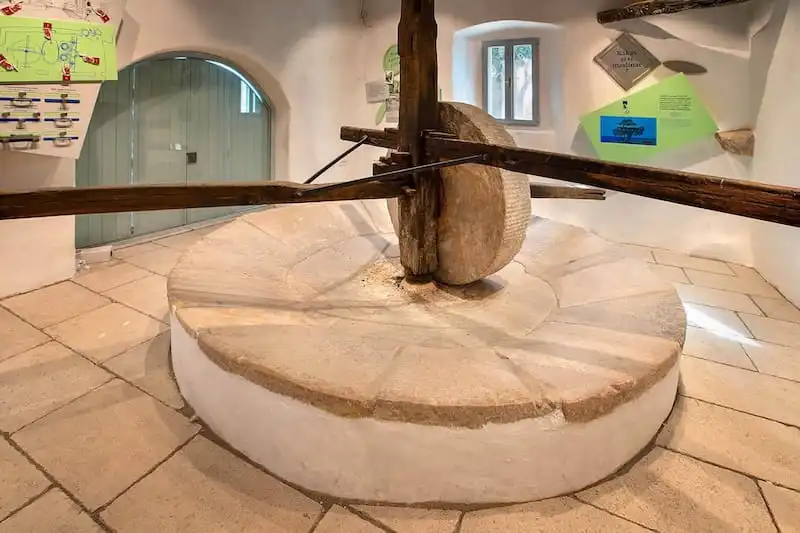
Punat is especially associated with this heritage. According to the local tourist board, olive oil once functioned as a means of exchange for residents, who traded it for food and other agricultural products. Traditional olive mills, known as toševi, served both practical and social purposes. They were places where neighbours met, worked and shared the excitement of the harvest.
Today, the story of olive oil from Krk continues in family-owned groves and modern mills. Equipment and processing standards have changed, but successful production still depends on healthy fruit, careful handling and knowledge passed between generations.
Every bottle of Krk olive oil tells part of this story. It also represents the effort invested in maintaining local agricultural traditions.
Indigenous Olive Varieties That Make Krk Special
A defining feature of Krk olive oil is its connection to four indigenous varieties: Debela, Naška, Rošulja and Slatka. Each has characteristics that reflect adaptation to local growing conditions.
Debela, also called Lošinjka or Krčka krupna, produces relatively large, fleshy fruit and is known for tolerating drought, wind and lower temperatures. Naška, or Drobnica, has smaller olives used for oil production; it is also valued as a pollinator, although it is more sensitive to cold and the bura wind.
Rošulja produces medium-sized fruit and is traditionally used for oil extraction. Slatka, also called Plominka, has fleshy fruit suitable for oil production or consumption as table olives, and is recognised for its tolerance of colder conditions.
These varieties can contribute different aromatic and sensory qualities. Their proportions and processing influence the finished oil. Exploring olive oil produced on Krk is therefore an opportunity to discover how local biodiversity becomes part of regional gastronomy.
Importantly, not all bottles taste identical. The variety of flavours is one of the pleasures of getting to know Krk olive oil through local producers and tastings.
Krčko Maslinovo Ulje: Protected Designation of Origin
The quality and geographical identity of this local speciality received important recognition when Krčko maslinovo ulje gained European Union Protected Designation of Origin (PDO) status in 2016. The designation links the product to its place of production.
Under the official specification, certified Krk olive oil must be extra virgin olive oil produced from olives grown within the defined geographical area. At least 80% of the olives must come from the indigenous Debela, Naška, Rošulja and Slatka varieties; other varieties grown in the designated area may account for no more than 20%.
The specification also sets measurable quality and sensory requirements, including a maximum free fatty acid content of 0.5%, expressed as oleic acid. This is stricter than the general limit for extra virgin olive oil. Production and packaging must take place within the designated area.
For travellers interested in buying authentic olive oil from Krk, the PDO label provides useful reassurance about origin and compliance with the protected specification. However, local origin and PDO certification are different: not every locally produced bottle is automatically PDO-certified.
From the Olive Harvest to Fresh Extra Virgin Oil
The journey of Krk olive oil begins long before the olives reach the mill. Growers maintain their trees throughout the year. Harvesting generally takes place during autumn, often in October and November, although exact timing varies with the weather, variety and desired flavour profile.
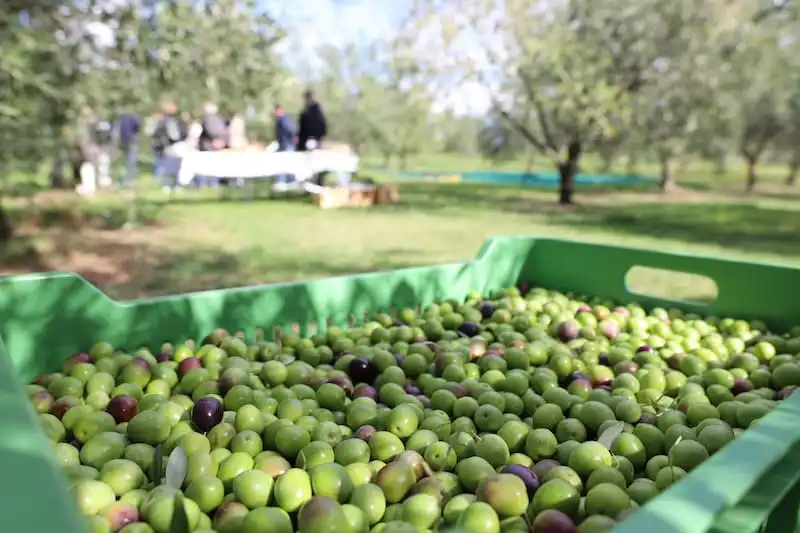
Early-harvest olives can produce oils with pronounced green aromas, bitterness and peppery notes. Fruit harvested later may yield a softer profile. Neither timing alone guarantees quality: healthy olives and prompt, careful processing are essential.
Because many groves occupy rocky or terraced land, harvesting olives on Krk often involves considerable manual work and the use of smaller tools. After collection, olives are taken to a mill, ideally without unnecessary delay, to reduce the risk of deterioration.
Olives are cleaned, crushed and mixed to combine oil droplets. Modern equipment then separates the oil mechanically, commonly through centrifugation. Extra virgin olive oil is not chemically refined; its quality depends on the olives and the care taken throughout production.
Once extracted, Krk olive oil is stored in appropriate containers protected from excessive light, heat and contact with air. These steps help preserve the freshness and aromas that make newly produced oil so appealing.
What Does Krk Olive Oil Taste Like?
The pleasure of tasting Krk olive oil lies in its balance of fruitiness, bitterness and pungency. Depending on the olive varieties and harvest, its aromas may recall fresh olives, leaves, grass or other green and fruity notes. A pleasant bitterness on the tongue and a peppery feeling in the throat can be signs of a fresh, well-made extra virgin oil rather than flaws.
To appreciate olive oil from Krk, pour a small amount into a glass, gently warm it in your hands and inhale its aroma. Take a sip, spread it across your palate and notice how the flavour develops. Some oils are delicate; others, intense.
If possible, compare more than one producer or harvest. An organised tasting can explain how different varieties and production choices influence the finished product. It is also a chance to learn why colour alone does not indicate quality: excellent oils can range from golden to green.
Discovering Krk olive oil this way adds meaning to the flavours you later encounter in island restaurants.
Krk Olive Oil in Traditional Island Cuisine
The best way to enjoy Krk olive oil is often the simplest. A drizzle over freshly grilled fish, vegetables or warm bread allows its character to shine without overpowering other ingredients. Garlic, parsley and lemon make natural companions, especially in dishes inspired by the Adriatic coast.
Locally served sea bass, sea bream, squid and other seafood pair well with extra virgin oil. Another island speciality worth trying is šurlice, handmade pasta traditionally served with various sauces. Olive oil can enrich a vegetable-based sauce or provide a finishing touch to the dish.
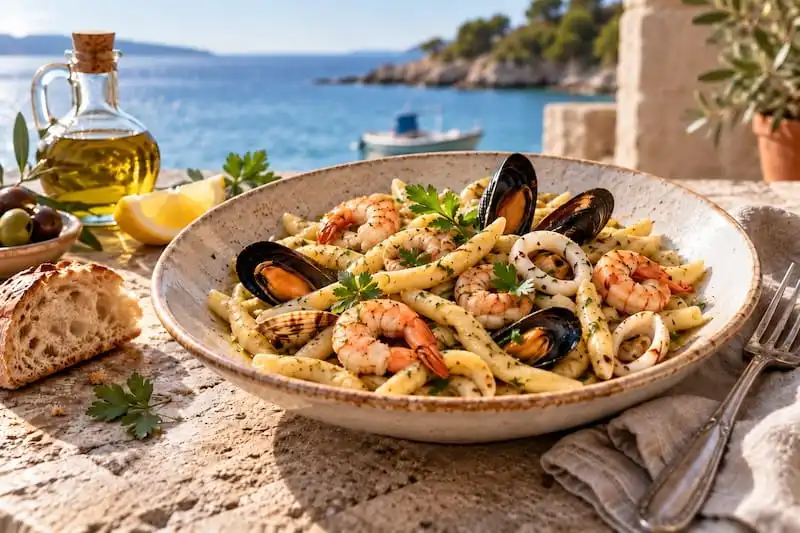
Krk sheep cheese, fresh tomatoes, seasonal greens and roasted vegetables offer further opportunities to experience olive oil on Krk as part of everyday Mediterranean cooking. Even a modest plate of bread, cheese and vegetables can become memorable when the ingredients are fresh and carefully prepared.
For an enjoyable gastronomic combination, try local olive oil alongside Krk’s famous Žlahtina wine, choosing dishes that suit both flavours. Food introduces visitors to island customs, and Krk olive oil is one of the ingredients that bring its culinary traditions together.
Where to Explore Olive Oil Heritage on Krk
Visitors who want to learn more about olive oil production on Krk can look beyond restaurants and shops. In Punat, the Stari Toš Olive-Growing Interpretation Centre presents traditional processing equipment and explains the significance of olive growing to local life. Its mill contrasts with modern methods.
Walking through the countryside is another rewarding option. Around Krk, traditional groves, paths and dry-stone walls illustrate the labour that generations invested in making rocky land productive. Certain themed walking trails introduce visitors to olive-growing heritage and the wider agricultural landscape.
You may also find producers and specialist shops offering local oils. Some provide tastings or explanations of their work, though opening hours and availability can vary with the season. Contacting a producer in advance is advisable if a tasting is an important part of your plans.
Experiencing olive oil from Krk where it is produced creates a stronger connection to the island. You can better understand the care behind each bottle and discover why this product means so much to local communities.
Autumn: An Ideal Time to Discover the Harvest
Although Krk attracts many visitors in summer, autumn offers a different rhythm. Beaches are quieter, walking routes can be especially enjoyable in mild weather, and rural activities return to the foreground. For anyone interested in olive oil on Krk, harvest season can be particularly rewarding.
Olive picking has traditionally brought family members and neighbours together. Today, visitors may notice work taking place in the groves, but these are often privately owned agricultural areas and should be respected. Harvest dates depend on weather and ripeness, so it is sensible to ask locally about seasonal experiences rather than assume that an event is taking place.
A holiday during this period can combine countryside walks, cultural visits and the pleasure of tasting fresh Krk olive oil with seasonal dishes. Island life continues beyond summer.
How to Buy and Store Krk Olive Oil
When choosing Krk olive oil, start with the label. Look for the producer’s name, origin information and, if you want certified Krčko maslinovo ulje, the relevant PDO identification. Where available, the harvest date can help you assess freshness.
Ask to taste the product whenever possible. Some people prefer gentle, fruity oils; others enjoy a stronger bitter and peppery finish. Choosing olive oil from Krk directly from a producer may also provide a chance to hear about the varieties used and how the olives were processed.
At home, store the bottle tightly closed, away from sunlight and heat. Dark glass or other protective packaging helps preserve its quality. Use it according to the producer’s guidance, and remember that freshness, suitable storage and personal taste matter more than colour alone.
Experience the Authentic Flavours of Krk Island
Krk olive oil brings together the island’s landscape, indigenous varieties and generations of agricultural knowledge. It is an ingredient to savour, a tradition to explore and a meaningful souvenir of a Mediterranean holiday.
From a simple seafood lunch to a visit to an old olive mill, discovering olive oil on Krk reveals experiences that complement the island’s beaches and historic towns. Plan your stay with EL-PI Tours, explore our selection of accommodation and discover the flavours and traditions that make Krk special.